Zulu Warrior Bust
Zulu Warrior digital sculpture
3D SCULPTING
Vincent Wai
2/27/20263 min read
Last week I began work on the fifth figure in my Zulu Wars series — a 1/9 scale Zulu warrior bust. This project continues my exploration of the remarkable warriors and regimental traditions of the Zulu Kingdom during the Anglo-Zulu War period.
The figure represents a determined uThulwana-Amamboza, often referred to as the “Dust-raisers.” The name evokes the image of warriors advancing at speed across the dry veld, their charge raising clouds of dust as they closed in on their enemy. Units with such reputations were known for their aggressive spirit and battlefield confidence.
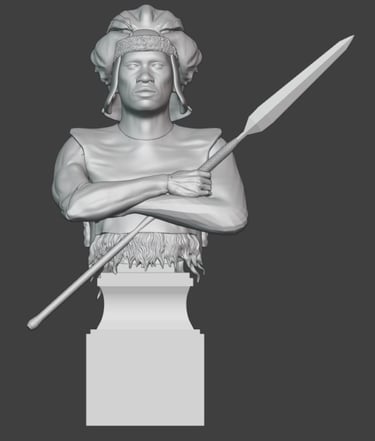
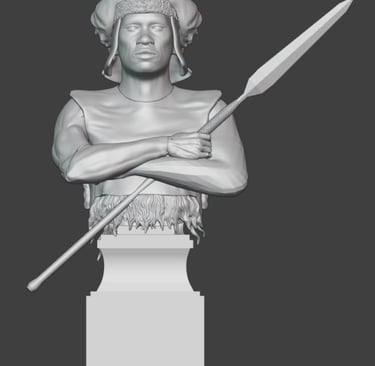
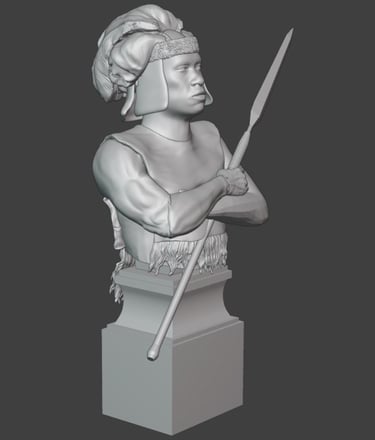
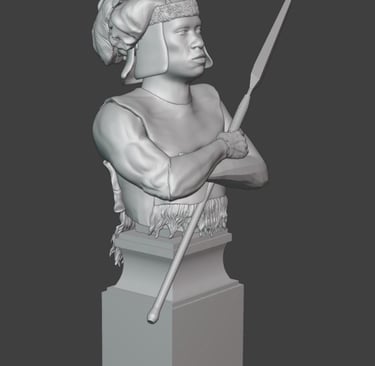
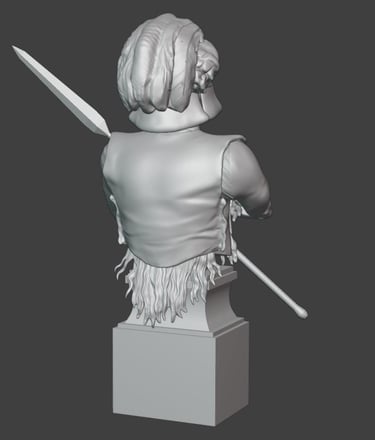
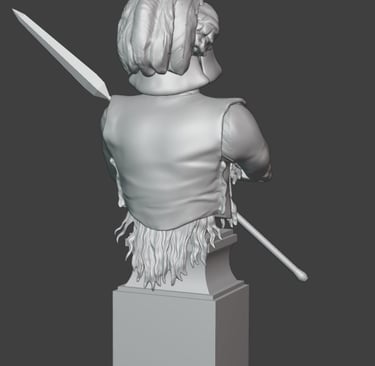
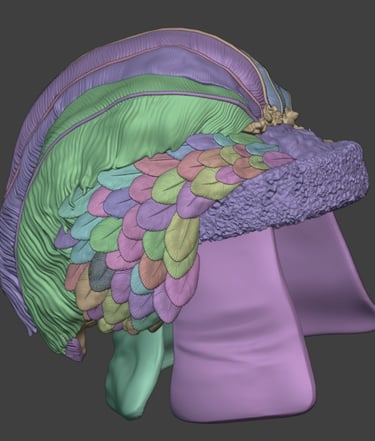
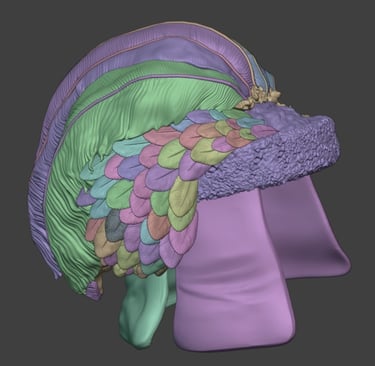
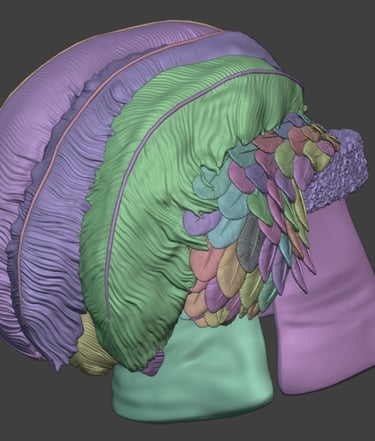
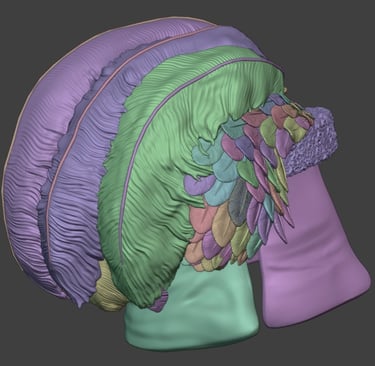
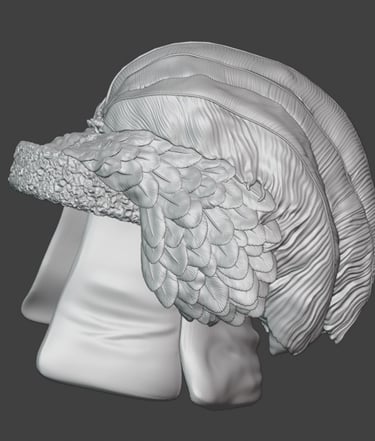
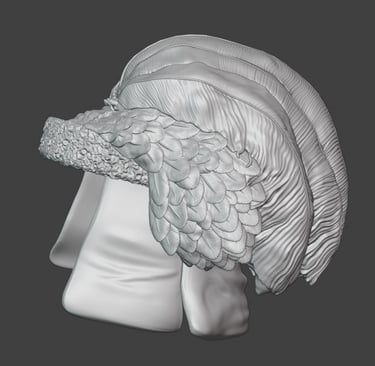
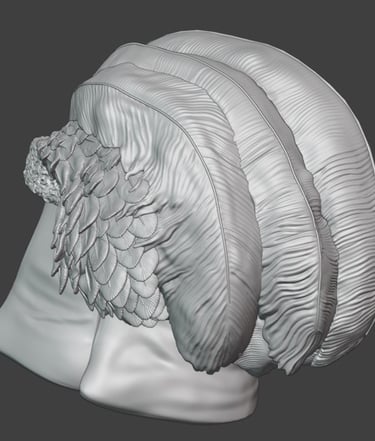
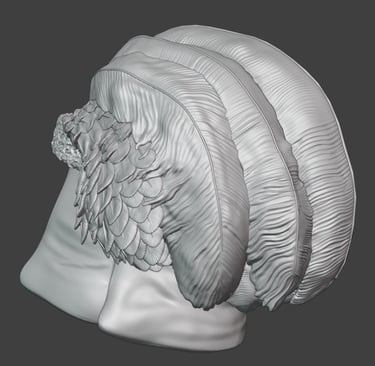
The warrior’s headdress is one of the most visually striking elements of the bust. It is lavishly decorated with a variety of feathers, including crane, ostrich, and sakabula (long-tailed widowbird) feathers, arranged to create both volume and movement. These feathered adornments were not merely decorative — they were an important part of Zulu martial identity, often indicating status, achievement, or regimental style.
Around the head is an otter-skin headband, which adds texture and contrast to the elaborate feather arrangement. Draped over the shoulders is a leopard-skin cape, worn over a layer of traditional cow-tail adornments. Such materials were highly valued and visually distinctive, contributing to the imposing appearance of experienced warriors.
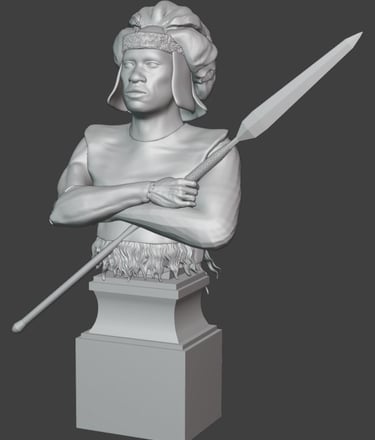
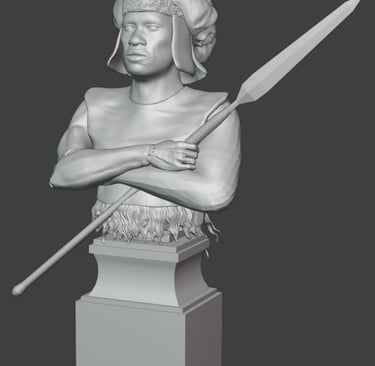
Shown below are some early work-in-progress (WIP) images of the bust. At this stage the basic pose has been established and I have begun developing the structure of the headdress. Much of the work so far has focused on building up the individual feather layers and refining their flow and overlap so that they will read clearly once painted.
Historical Note – The Sakabula Feather
One of the most distinctive feathers used in Zulu headdresses comes from the Long-tailed widowbird, known locally as the sakabula. During the breeding season the male bird develops extremely long tail feathers, which made them highly prized as ornaments among Zulu warriors. These feathers were often worn in headdresses and headbands and could signify prestige or distinction within a regiment.
Historical Note – Leopard Skin or amambatha in Zulu Dress
Leopard skin was one of the most prestigious materials used in traditional Zulu attire. Because leopards were difficult and dangerous to hunt, the skins were associated with bravery and status. Warriors and leaders sometimes wore leopard-skin capes or bands as part of ceremonial or martial dress, adding to the dramatic and imposing appearance of the warrior on the battlefield.
As the sculpt progresses, I will continue refining the anatomy, textures, and smaller details to better capture the character and presence of the warrior. The headdress in particular will receive further attention, as the complex layering of feathers is one of the defining visual elements of this piece.
More updates will follow as the project moves into the next stages of detailing and preparation.